
Electrical stage
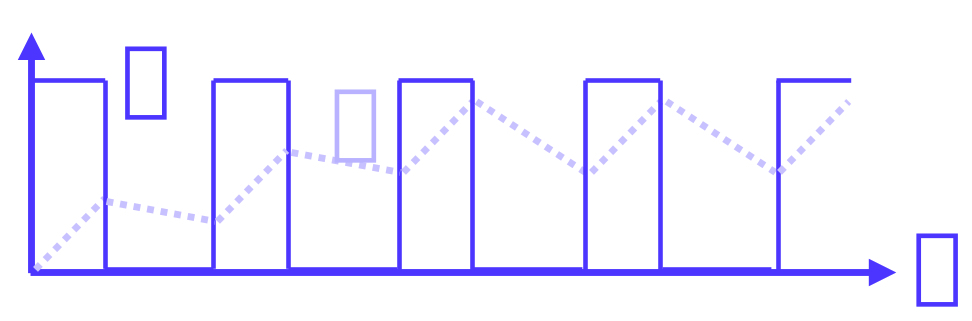
Resolve switching-accurate electrical waveforms and record steady-state electrical currents and voltages for loss extraction.
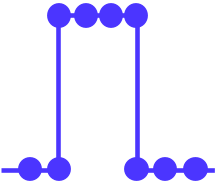
Small time step + short simulation period
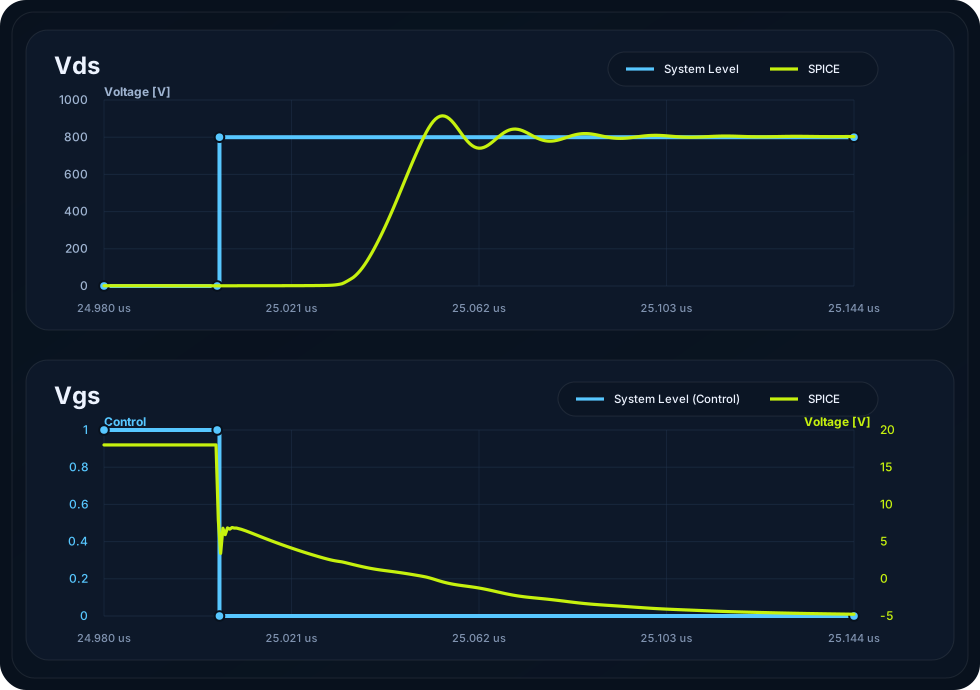
SIMBA is the only power electronics simulator where system-level and SPICE analyses run in the same environment, with the same solver and the same workflow. Move from fast system studies to vendor SPICE detail without rebuilding your circuit.
Power electronics teams typically use one tool for system-level simulation and another for SPICE-accurate device analysis. These tools were built for different purposes, and they do not share models.
The result is predictable: when you need both levels of fidelity, you end up maintaining two parallel models of the same design and manually transferring data between tools.
As wide-bandgap devices like SiC and GaN push switching speeds higher, the need for accurate switching-event detail becomes unavoidable where system-level models simply cannot keep up. With every new device generation, the gap is increasing, costing engineering teams weeks of rework per project.
SIMBA is built around a simple architectural decision: system-level and SPICE simulations can share the same solver. Every level of fidelity, from fast behavioral sweeps to full SPICE transients, runs in the same environment, so teams can move from architecture exploration to device-level validation without changing tools.
Ideal switches with datasheet-based loss data. Maximum simulation speed. Suited to architecture exploration and parametric sweeps across hundreds of operating points.
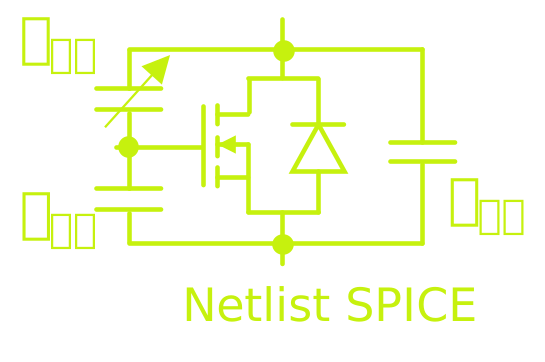
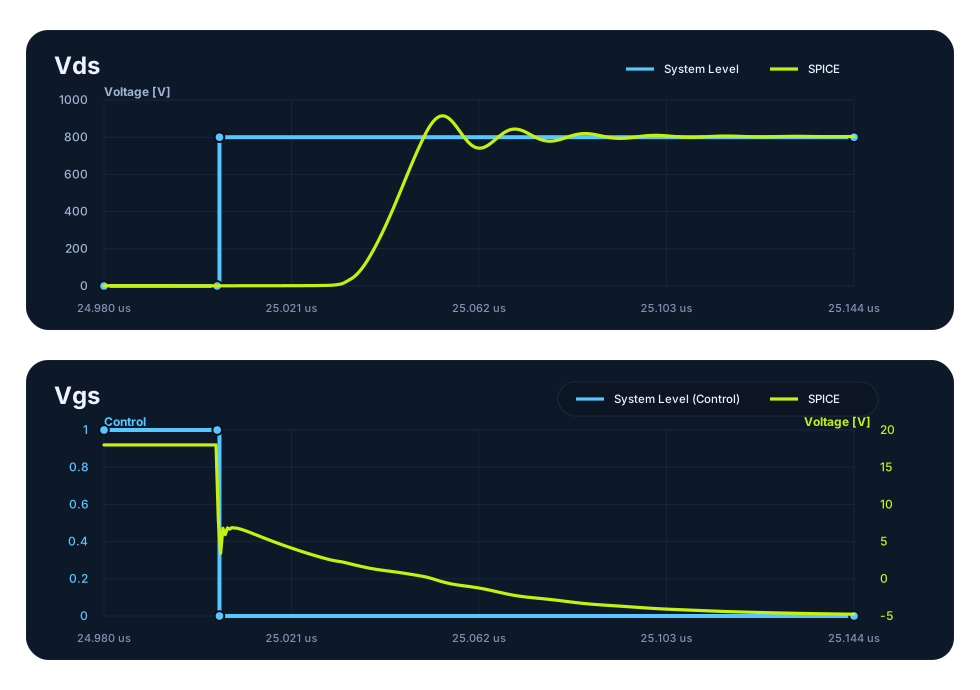
The manufacturer's actual device model: non-linear capacitances, gate resistances, and switching transients. Placed directly in the system environment. No separate tool.
With Silicon (Si) devices:
Ideal models combined with datasheet-based loss tables proved sufficiently accurate for the vast majority of applications.
Gate driver design was generally well understood and robust, largely benefiting from decades of accumulated engineering experience.
SiC and GaN have challenged these assumptions:
Their higher switching frequencies increase the impact of parasitic elements, making datasheet-based loss estimations less reliable.
Their much faster switching dynamics, along with strongly non-linear output capacitances, make gate driver design more complex and sensitive. Ideal models cannot accurately predict the switching behavior of wide-bandgap devices.
Applications such as solid-state transformers, EV battery chargers, and data center power supplies rely on isolated DC-DC converters operating in Zero-Voltage Switching (ZVS) using topologies like LLC and Dual Active Bridge (DAB) to achieve extremely high efficiency and power density.
In ZVS conditions, switching losses cannot be accurately predicted from standard datasheet values derived from Double Pulse Tests (DPT).
SIMBA enables the generation of custom loss data under ZVS operation and integrates it into system-level simulations for more accurate efficiency estimation.
Electrothermal simulation, 10× faster.
Electrothermal simulation combines long thermal durations with switching-scale time steps, which makes conventional fully coupled runs impractically slow. SIMBA resolves the fast electrical behavior first, records steady-state electrical currents and voltages, then advances the thermal stage with longer time steps toward thermal steady-state.
Resolve switching-accurate electrical waveforms and record steady-state electrical currents and voltages for loss extraction.
Small time step + short simulation period
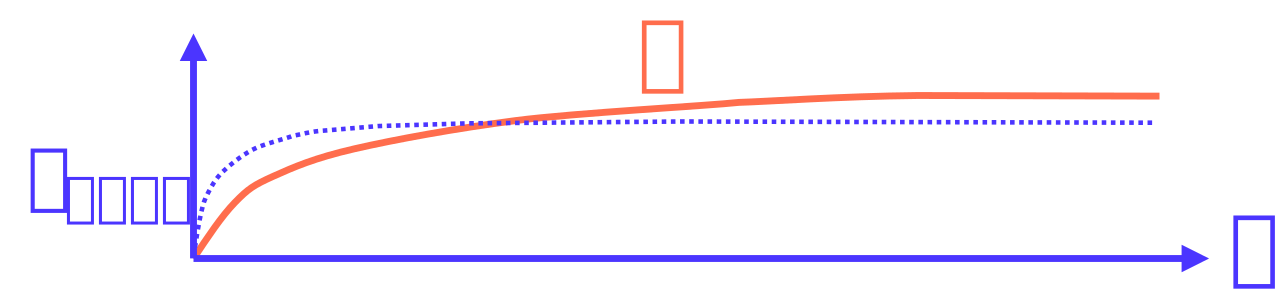
Advance junction temperature toward thermal steady-state with longer valid time steps driven by the recorded electrical losses.

Longer time step.
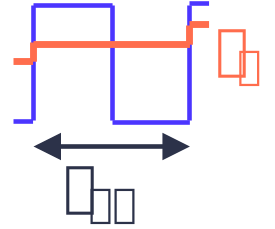
Assumes constant junction temperature over a switching period.
Simulation speed gain demonstrated in examples such as:
Create an account to access the free demo, explore the unified simulation environment, and browse technical resources with concrete examples and application notes.
Detailed SPICE simulation requires the SPICE add-on module.



© Copyright 2019-2026 – AESIM.tech | Privacy policy